
What to do before the plumber arrives: an emergency checklist
By Aisha Abbott · Updated 2026-06-15
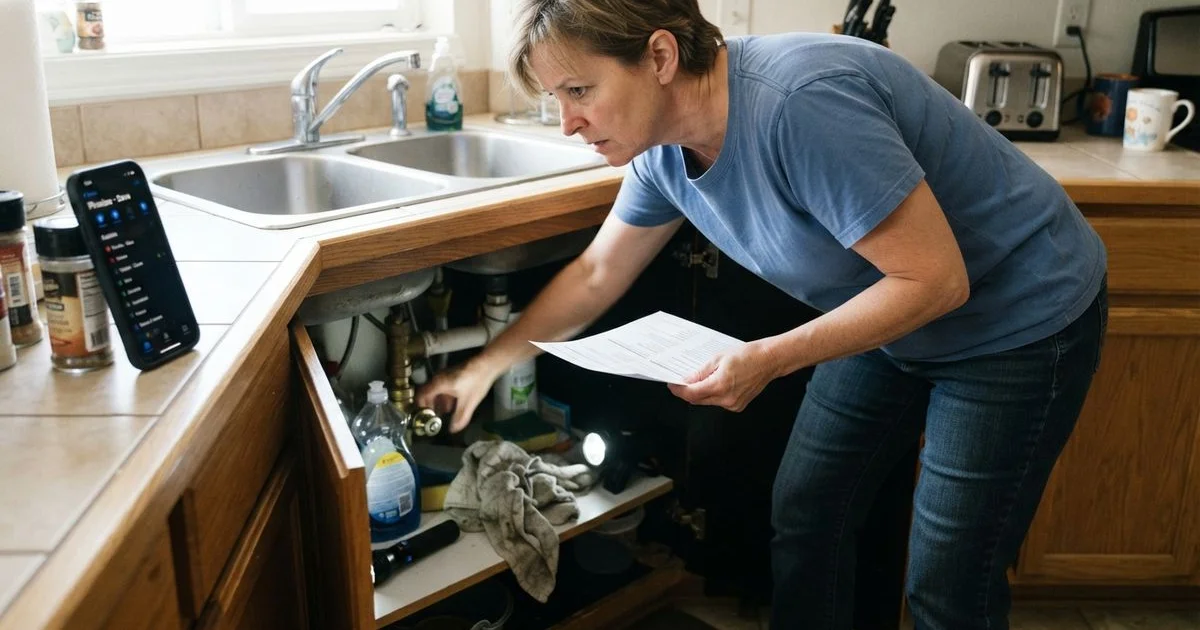
A burst pipe or an overflowing drain does not wait for business hours, and the first ten minutes before help arrives often decide how much damage you are cleaning up afterward. This checklist covers what actually helps, without asking you to do anything a plumber should handle instead. See our directory of Columbia-area plumbers if you have not already found one to call.
Step 1: stop the water
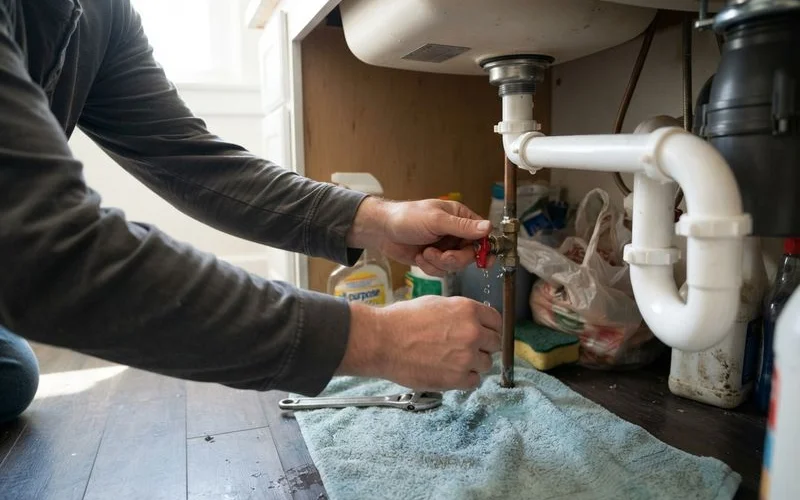
Shutting off the water is the single most useful thing you can do. Every home has a main shutoff valve, and most fixtures also have individual shutoff valves under sinks and behind toilets. If the leak is isolated to one fixture, closing that valve alone may be enough. If water is spreading or you cannot find the source, shut off the main.
Turn the valve clockwise until it stops. If it will not budge, do not force it hard enough to risk breaking it, since that turns one problem into two.
Step 2: address electrical risk
Water and electricity are a genuinely dangerous combination. If water is pooling anywhere near outlets, appliances, or your electrical panel, and you can reach the breaker without walking through standing water, switch off power to that area. If you cannot reach it safely, leave it and wait for help.
Step 3: contain and protect
Once the water is off or slowed, move what you can. Towels, buckets, and a wet vacuum if you have one can limit how far water spreads into flooring, carpet, or drywall. Move furniture and valuables out of the immediate area. Do not spend so much time on this that you delay calling for help.
| Situation | First action | Then |
|---|---|---|
| Burst or leaking pipe | Shut off main water valve | Contain water, call a plumber |
| Overflowing toilet | Shut off toilet’s supply valve | Stop using that bathroom |
| No hot water / no water at all | Check main valve is open | Call a plumber to diagnose |
| Sewage backup | Avoid the area, do not run water | Call a plumber immediately |
| Smell of gas near a water heater | Leave the area, do not flip switches | Call your gas utility and a licensed plumber from outside |
Step 4: call for help and describe the problem clearly
When you call, be specific: what is leaking or backing up, whether you have already shut off the water, and how long it has been happening. A plumber triaging multiple calls will prioritize based on what you tell them, so a clear description helps you get seen faster if the problem is genuinely urgent. See our methodology for how we score plumbers on response speed and follow-through, which matters most in exactly this kind of situation.
What not to do
Do not pour chemical drain cleaner into a backed-up drain hoping to fix it before the plumber arrives; it rarely works on a serious clog and can make the eventual repair more hazardous for whoever handles it. Do not attempt to cut, weld, or force open pipe fittings yourself. And do not ignore a gas smell near any plumbing fixture: leave the area and call your gas utility along with a licensed plumber. This is general safety information, not a substitute for professional judgment on the scene.
After the immediate danger passes
Once the water is off and the area is contained, take a few photos of the damage for your records, in case you need them for an insurance claim. Note the time the problem started and what you observed, since a plumber will ask. From there, it becomes a scheduling question rather than an emergency, unless the source of the problem is still active. If a hard freeze caused the burst, the guide to winterizing pipes covers how to keep it from happening again. Browse emergency plumbers in the Columbia area once you are ready to get someone on site.
Bottom line
The goal in the first few minutes of a plumbing emergency is simple: stop the water, protect against electrical risk, limit the spread of damage, and get a clear call in to a plumber. Everything past that point is their job, not yours.
FAQ
- Where is the main water shutoff valve usually located?
- In most homes it is near where the water line enters the house, often in a basement, crawlspace, garage, or utility closet. Some homes also have a valve at the street. Find yours before an emergency happens, not during one.
- Should I turn off electricity during a plumbing emergency?
- If water is pooling near outlets, a water heater, or any electrical panel, switch off power to that area at the breaker if you can reach it safely. If reaching the panel means walking through standing water, stay out and wait for help instead.
- What information should I have ready when I call a plumber?
- The type of problem, whether water is actively flowing, whether you have shut off the main valve, and your address and access details. If you can, take a few photos so the plumber has an idea of what they are walking into.
- Is it safe to try a temporary fix myself before the plumber gets there?
- Stopping the flow of water, like shutting a valve, is almost always safe and helpful. Attempting to cut into pipe, force a stuck valve, or work near an active gas leak is not: leave repairs to the plumber and focus on containment only.