
Commercial plumbing maintenance: what facility managers should schedule
By Aisha Abbott · Updated 2026-07-03
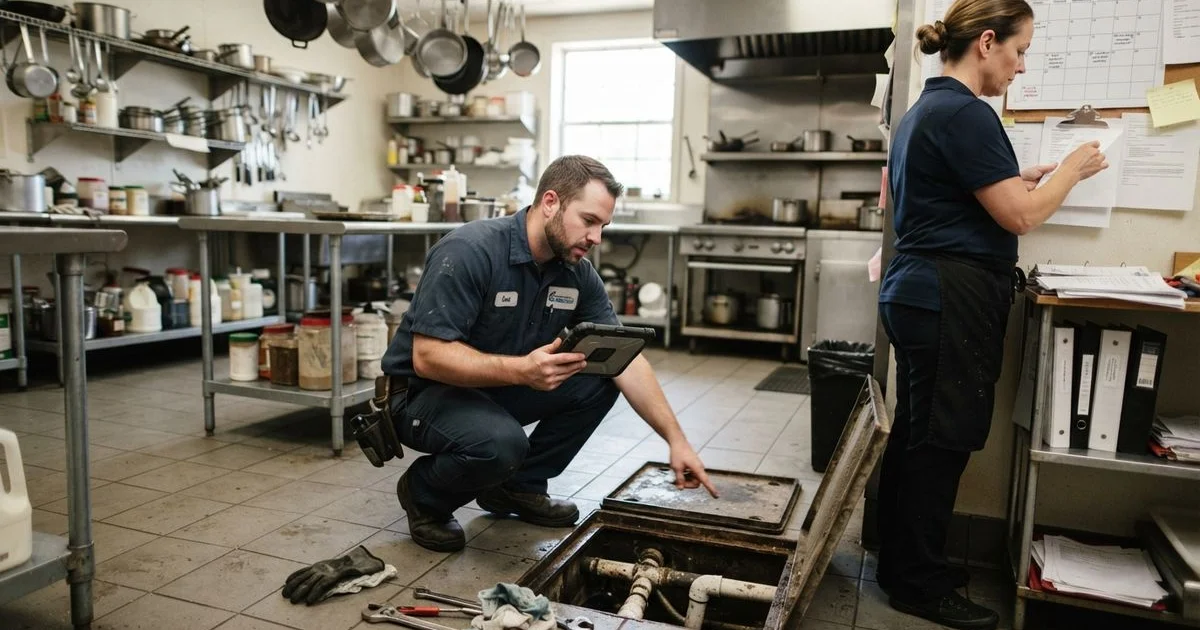
Unplanned plumbing downtime in a commercial building costs more than the repair itself: lost business hours, disrupted operations, and sometimes closure until the problem is fixed. A regular maintenance schedule catches most issues before they become emergencies.
A practical maintenance schedule
| Frequency | Tasks |
|---|---|
| Monthly | Visual check of visible pipes and fixtures for leaks; grease trap check for kitchens |
| Quarterly | Drain flow check, water heater visual inspection, fixture and valve check |
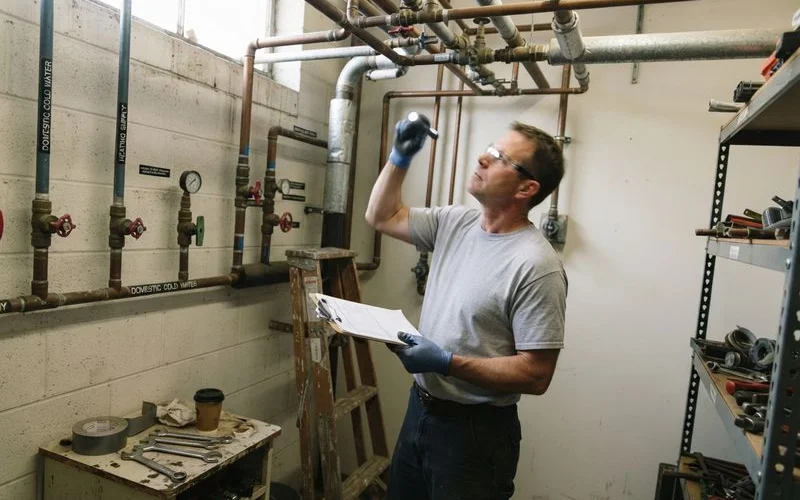
| Annually | Full system inspection, backflow preventer testing and certification, water heater flush |
| As needed | Sewer camera inspection if drains show recurring slow flow |
This schedule is a general starting point. A building with a commercial kitchen, multiple floors, or older infrastructure may need more frequent checks on specific systems, so ask a commercial plumber to help tailor a schedule to your building’s actual usage and age.
Why backflow testing is not optional
Commercial and irrigation water connections carry a real risk of contaminating the public water supply if a backflow preventer fails, which is why most jurisdictions legally require annual testing and certification for these connections. This is one of the few plumbing maintenance items that is a compliance requirement, not just good practice, so missing it can create a liability issue beyond the plumbing itself.
Grease traps and kitchen drains
Commercial kitchens generate grease that solidifies inside drain lines over time, and this is consistently one of the leading causes of unplanned service calls in food-service buildings. A grease trap needs regular cleaning on a schedule based on kitchen volume, not a fixed calendar date, and drain lines downstream of the kitchen benefit from periodic hydro jetting to clear buildup before it causes a full blockage. For a look at what that visit involves, see our guide to a drain cleaning or hydro jetting appointment.
Water heaters take more wear in commercial settings
Commercial water heaters, especially in buildings with heavy or continuous demand, work harder than a typical residential unit and benefit from more frequent flushing to clear sediment buildup, which extends the unit’s working life and keeps it running efficiently. A neglected commercial water heater is one of the more expensive unplanned failures a facility manager deals with, both in repair cost and in the disruption of losing hot water during business hours.
Building the relationship with a provider
For a facility that depends on uninterrupted plumbing, a standing relationship with a commercial plumber who already knows the building’s layout and history is worth more than shopping around every time something breaks. That familiarity speeds up diagnosis and reduces the guesswork on future calls. Compare commercial plumbing providers in Columbia with experience in your type of facility, whether that’s an office, restaurant, or multi-tenant property.
Bottom line
A quarterly and annual maintenance schedule, with particular attention to backflow testing, grease trap cleaning, and water heater upkeep, prevents most of the unplanned plumbing downtime that disrupts a commercial building. Our directory of Columbia plumbers and methodology can help you find a provider set up for ongoing commercial maintenance rather than one-off repairs.
FAQ
- How often should a commercial building schedule plumbing inspections?
- A general walkthrough quarterly, with a full annual inspection covering water heaters, backflow preventers, and drain lines. Buildings with commercial kitchens or heavy fixture use often benefit from more frequent grease trap and drain checks, sometimes monthly.
- Is backflow testing legally required for commercial properties?
- In most jurisdictions, yes, annual backflow preventer testing and certification is required for commercial and irrigation connections, since a failed backflow preventer risks contaminating the public water supply. Check with your local water utility for the specific requirement in your area.
- What's the biggest cause of unplanned commercial plumbing downtime?
- Grease buildup in kitchen drain lines and neglected water heater maintenance are two of the most common causes of unplanned service calls in commercial buildings, and both are largely preventable with a regular maintenance schedule.