
Tankless vs. tank water heaters: how to choose
By Aisha Abbott · Updated 2026-06-10
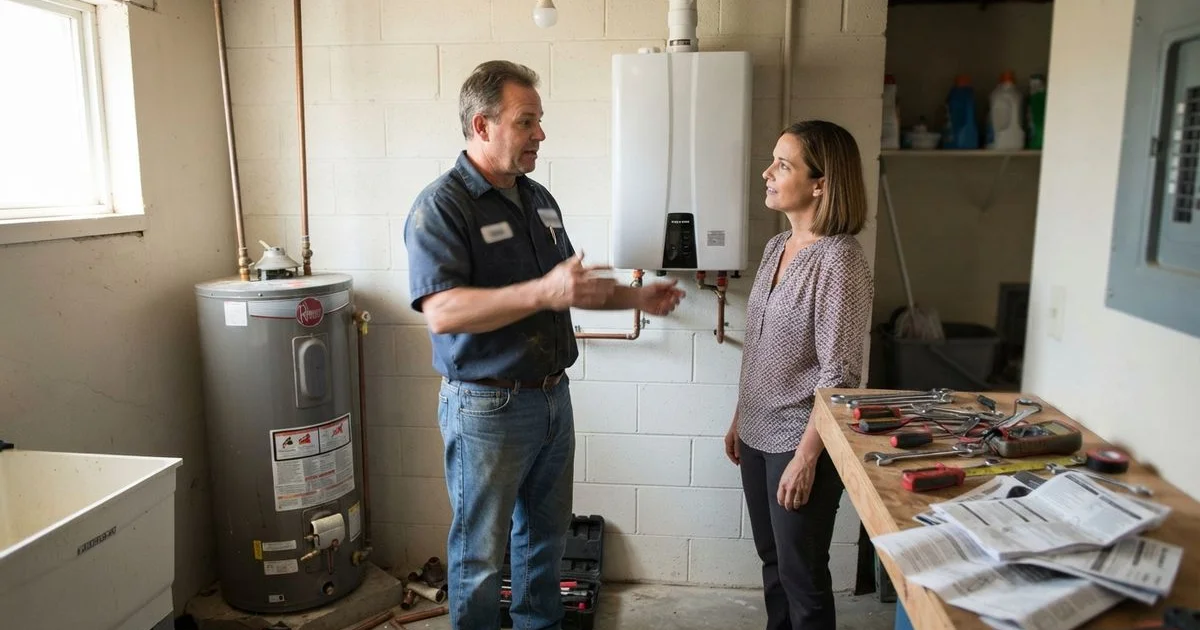
Replacing a water heater is one of those decisions homeowners only think hard about once the old one is already failing, which is not the best time to weigh options carefully. If yours is still working, this is the moment to compare tank and tankless before you are stuck making a rushed call. Our directory of Columbia plumbers covers installers for both types if you want to see who is nearby once you decide.
The basic difference
A tank water heater keeps 40 to 75 gallons of water hot around the clock, ready the moment you turn on a faucet. A tankless unit heats water only as it passes through, using a gas burner or electric element that fires up on demand. That single design difference explains almost every tradeoff below.
Search for water heater services in Columbia once you have narrowed down which type fits your home, so you can compare installers who handle the specific setup you want.
Upfront cost and installation
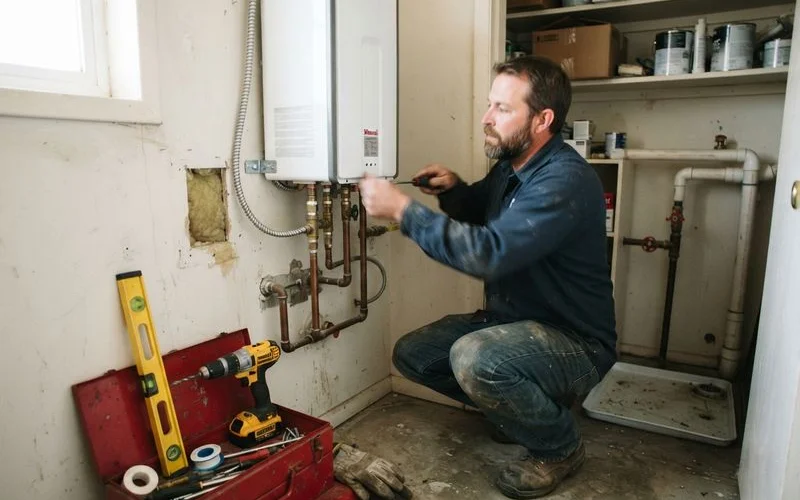
Tank units are cheaper to buy and usually cheaper to install, especially if you are replacing a tank with another tank in the same spot. Tankless units cost more for the equipment itself, and installation often runs higher too if your home needs a larger gas line, upgraded venting, or a new electrical circuit. Converting from tank to tankless for the first time is where most of that extra installation cost shows up.
Running cost and lifespan
| Factor | Tank | Tankless |
|---|---|---|
| Typical lifespan | 8-12 years | 15-20 years |
| Standby energy loss | Yes, water stays heated at all times | No, heats only on demand |
| Upfront cost | Lower | Higher |
| Space needed | A closet or utility room | Wall-mounted, smaller footprint |
| Simultaneous hot water use | Limited by tank size | Limited by flow rate, not volume |
Tankless units avoid the standby energy loss that comes from keeping a full tank hot 24 hours a day, so monthly utility bills tend to run lower. Over a 15-year span, that difference plus the longer lifespan is usually what closes the gap on the higher purchase price.
Sizing for your household
A tank is sized in gallons: a 40-gallon tank suits a smaller household, while a family of four or five often needs 50 to 75 gallons to avoid running cold mid-shower. A tankless unit is sized by flow rate, measured in gallons per minute, and the number that matters is how many fixtures might run hot water at the same time. A single tankless unit sized for one bathroom will struggle if a second shower and the washing machine start up simultaneously. Some households solve this with two smaller tankless units instead of one large one.
What actually breaks the decision
- You are staying in the home long-term and want lower energy bills: tankless usually wins on total cost over 15+ years.
- You want the lowest possible upfront cost, or you are replacing a failed unit fast: tank is simpler and faster to install in most cases.
- Your home already has the gas line and venting a tankless unit needs: tankless becomes a much easier call, since the extra installation cost drops away.
- You have a large household with overlapping hot water demand: either option works if sized correctly, but get a plumber to calculate peak simultaneous flow before you commit to a tankless unit.
Maintenance differences
Tank units need occasional flushing to clear out sediment that settles at the bottom, and the anode rod inside should be checked periodically since it is what keeps the tank itself from corroding. Tankless units need periodic descaling, especially in areas with harder water, since mineral buildup on the heat exchanger reduces efficiency over time. Neither is high-maintenance, but skipping maintenance shortens the lifespan advantage tankless units are supposed to offer. Other jobs need their own upkeep routine too; the drain cleaning appointment guide covers what to expect when you schedule that kind of maintenance call.
If you are still deciding what any of this will cost for your specific home, our methodology explains how we score and rank plumbers on transparency and follow-through, which matters as much as the equipment choice itself when you are picking who does the install.
Bottom line
There is no universally correct answer here. A tank water heater is the lower-friction, lower-cost choice for most straightforward replacements. A tankless unit costs more upfront but pays that back over time through lower running costs and a longer service life, provided your home’s gas and electrical setup can support it without major changes. Get quotes for both configurations before deciding, since the installation cost gap is often the real deciding factor, not the price of the unit itself.
FAQ
- Is a tankless water heater worth the extra upfront cost?
- It depends on how long you plan to stay in the home and how much hot water your household uses. Tankless units cost more to buy and install but last longer and use less energy over time, so the payback usually shows up after several years, not immediately.
- Can I replace a tank water heater with a tankless one without extra work?
- Sometimes, but often not. Tankless units need a bigger gas line or a dedicated electrical circuit, plus proper venting, so swapping in one where a tank used to sit can mean extra installation work beyond just the unit itself.
- How much longer does a tankless water heater last than a tank?
- Tank water heaters typically run 8 to 12 years. Tankless units commonly reach 15 to 20 years with regular maintenance, largely because there is no tank to corrode from the inside out.
- Will a tankless water heater run out of hot water?
- Not in the way a tank does, but it can be outpaced. A tankless unit heats water on demand, so if two showers and a dishwasher run at once, an undersized unit will struggle to keep up. Sizing for peak simultaneous use matters more than it does with a tank.